
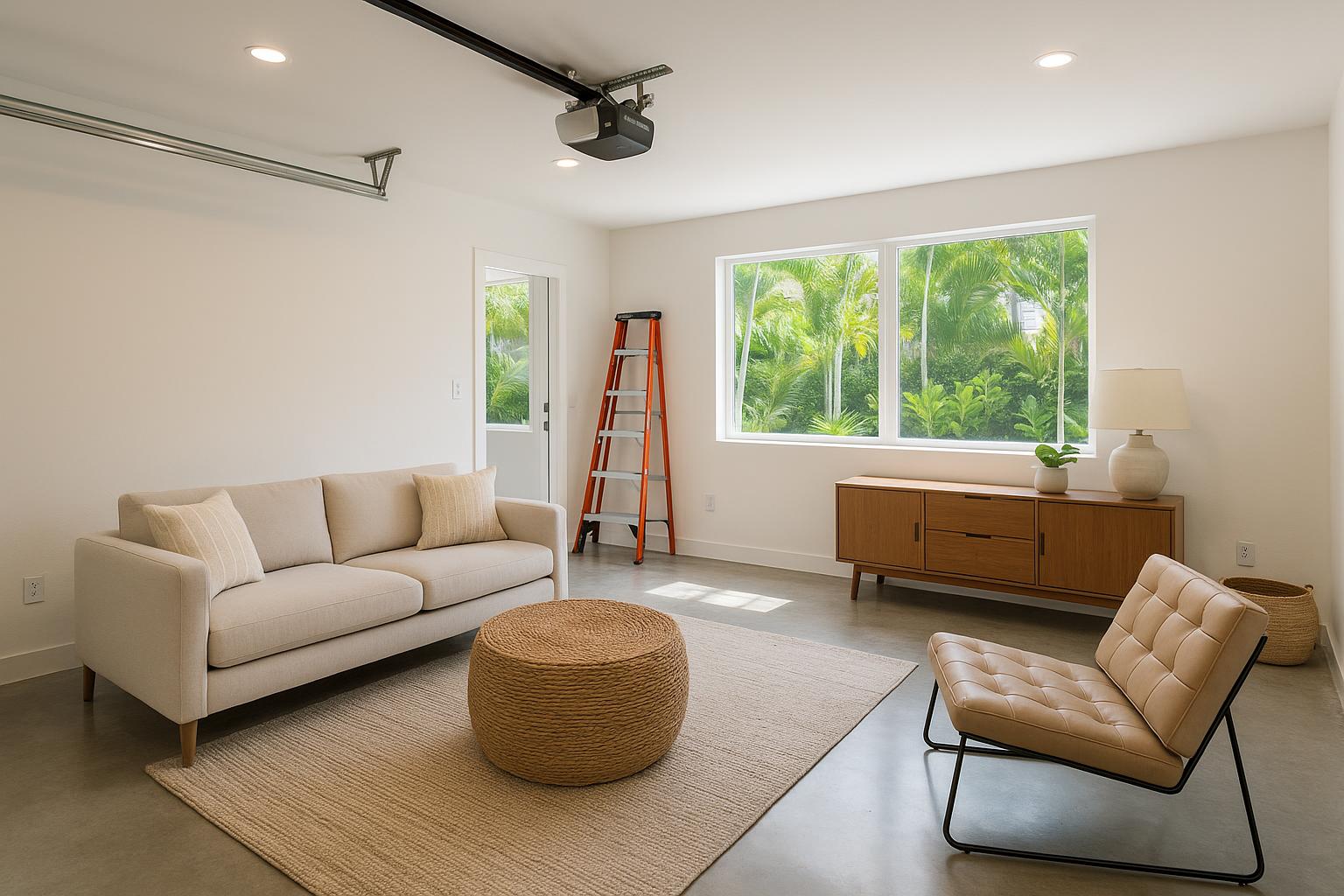
Why Miami Homeowners Are Converting Their Garages
In a city where real estate prices continue to climb, many homeowners are looking inward rather than outward for more living space. Garage conversions have become one of the most popular remodeling projects in Miami, and for good reason. Most families use their garage as a catch-all storage area rather than actually parking their cars. Converting that underused square footage into a functional living space can add a bedroom, home office, rental suite, or entertainment room without the cost and complexity of building an entirely new addition.
But a garage conversion isn't as simple as throwing down some flooring and calling it a day. Done poorly, it can hurt your home's value and create headaches with the city. Done right, it becomes one of the smartest investments you can make. Here's how to plan yours without regrets.
Step 1: Understand Miami-Dade County Permit Requirements
Before you pick out paint colors or furniture layouts, you need to address the legal side. In Miami-Dade County, converting a garage into habitable space requires building permits. This isn't optional — unpermitted work can result in fines, complications when selling your home, and even orders to reverse the conversion.
The permitting process typically involves:
- Submitting architectural plans that show the proposed changes to your home's layout
- Meeting Florida Building Code requirements for habitable rooms, including ceiling height, ventilation, egress windows, and electrical standards
- Passing inspections at various stages of construction, including framing, electrical, plumbing (if applicable), and final walkthrough
Working with a licensed contractor who understands Miami-Dade's specific requirements will save you significant time and stress. They'll know exactly what inspectors look for and can ensure your project stays on the right side of the code.
Step 2: Address the Florida Climate Factor
One of the biggest challenges with garage conversions in South Florida is climate control. Garages were never designed to be comfortable living spaces. They typically lack insulation, have concrete slab floors that radiate heat, and have minimal or no HVAC connections.
To make your converted space comfortable year-round in Miami's heat and humidity, you'll need to consider:
- Insulation: Walls and ceiling will need proper insulation to keep the space cool and reduce energy costs. Spray foam insulation is particularly effective in our humid climate because it also acts as a moisture barrier.
- HVAC extension or mini-split installation: A ductless mini-split system is often the most efficient solution for a garage conversion. It provides both cooling and heating without requiring expensive ductwork modifications to your existing system.
- Moisture management: Miami's humidity is relentless. Proper vapor barriers, sealed concrete floors, and adequate ventilation prevent mold growth and musty odors that can plague poorly converted garages.
- Impact-resistant windows and doors: If you're adding or replacing windows, Miami-Dade County requires impact-rated products to meet hurricane building codes.
Step 3: Plan the Layout With Purpose
The most successful garage conversions start with a clear vision of how the space will be used. A vague plan leads to a room that doesn't quite work for anything. Ask yourself these questions before finalizing your design:
- Will this space need plumbing? Adding a bathroom or kitchenette significantly increases cost but also adds functionality and value.
- Do you need a separate entrance? This is essential if you plan to use the space as a rental unit or in-law suite.
- How will the conversion blend with the rest of your home? The transition from your main living area to the converted space should feel seamless, not like walking into a different building.
- What about storage? You're losing your garage, so where will tools, bikes, holiday decorations, and other items go?
Many homeowners in Coral Gables and Kendall have found that converting their garage into an accessory dwelling unit — essentially a small apartment — provides rental income that helps offset their mortgage. Others in areas like Doral and Hialeah use the space as a multigenerational living solution, creating comfortable quarters for aging parents or adult children.
Step 4: Budget Realistically
Garage conversions are generally more affordable than ground-up room additions because the basic structure already exists. However, costs can vary widely depending on the scope of work.
Here's a general breakdown of what drives costs:
- Basic conversion (insulation, drywall, flooring, electrical, HVAC, and paint): This covers the essentials to make the space livable and comfortable.
- Mid-range conversion (everything above plus a bathroom, upgraded finishes, and custom storage): This is the sweet spot for most homeowners who want a polished, functional room.
- High-end conversion (full suite with kitchenette, separate entrance, premium materials, and smart home features): This is typical for rental units or luxury home offices.
The best approach is to get a detailed estimate from your contractor that accounts for permits, materials, labor, and a contingency buffer of around 10-15% for unexpected issues. Older homes in Miami Beach, for instance, sometimes reveal outdated wiring or plumbing that needs to be brought up to code once walls are opened up.
Step 5: Think About Resale Value
A well-executed garage conversion can increase your home's value, but a poorly done one can actually decrease it. Buyers and appraisers look for quality workmanship, proper permits, and a conversion that makes sense for the home's overall layout.
One common concern is losing covered parking. In some Miami neighborhoods, especially those with homeowner associations, removing a garage can create issues. Check your HOA rules before proceeding, and consider whether the trade-off makes sense for your situation.
If resale value is a priority, focus on conversions that add a bedroom and bathroom, as these directly impact your home's comparable value. A permitted extra bedroom with an en-suite bath is one of the strongest value-adds in South Florida real estate.
Making the Right Choice for Your Home
A garage conversion is one of the most efficient ways to gain living space without the disruption and expense of a full addition. But it requires careful planning, the right permits, and a contractor who understands the unique demands of building in Miami's climate and regulatory environment.
At Bayview Room Addition, we've helped homeowners across Miami transform their garages into beautiful, functional spaces that feel like they were always part of the home. Whether you're envisioning a guest suite, a home gym, or a private office, the key is starting with a solid plan and a team that knows how to execute it.
If you're considering a garage conversion, reach out for a consultation. We'll walk through your space, discuss your goals, and give you an honest assessment of what's possible within your budget.